Why Heat a Cabin with a Wood Stove?
A Primal Attraction
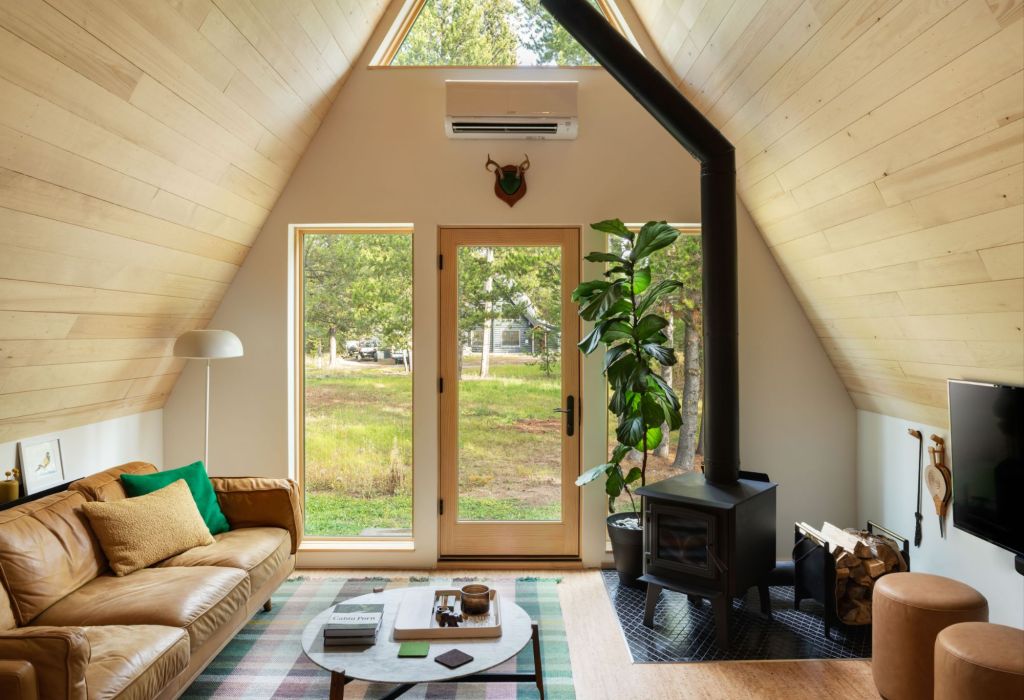
The look, feel, and smell of a fire has a very primal attraction; and is part of the desire to have a wood stove for your cabin. However, while a wood stove in a cabin might seem like a natural fit – you should review the guide below highlighting major drawbacks to see if it’s a good fit for you.
Why We Don’t Recommend Wood Stoves
That said, and a disclosure that we have a wood stove in our cabin, the official recommendation here is to not install one. Here are all the reasons you don’t want a wood stove in your cabin.
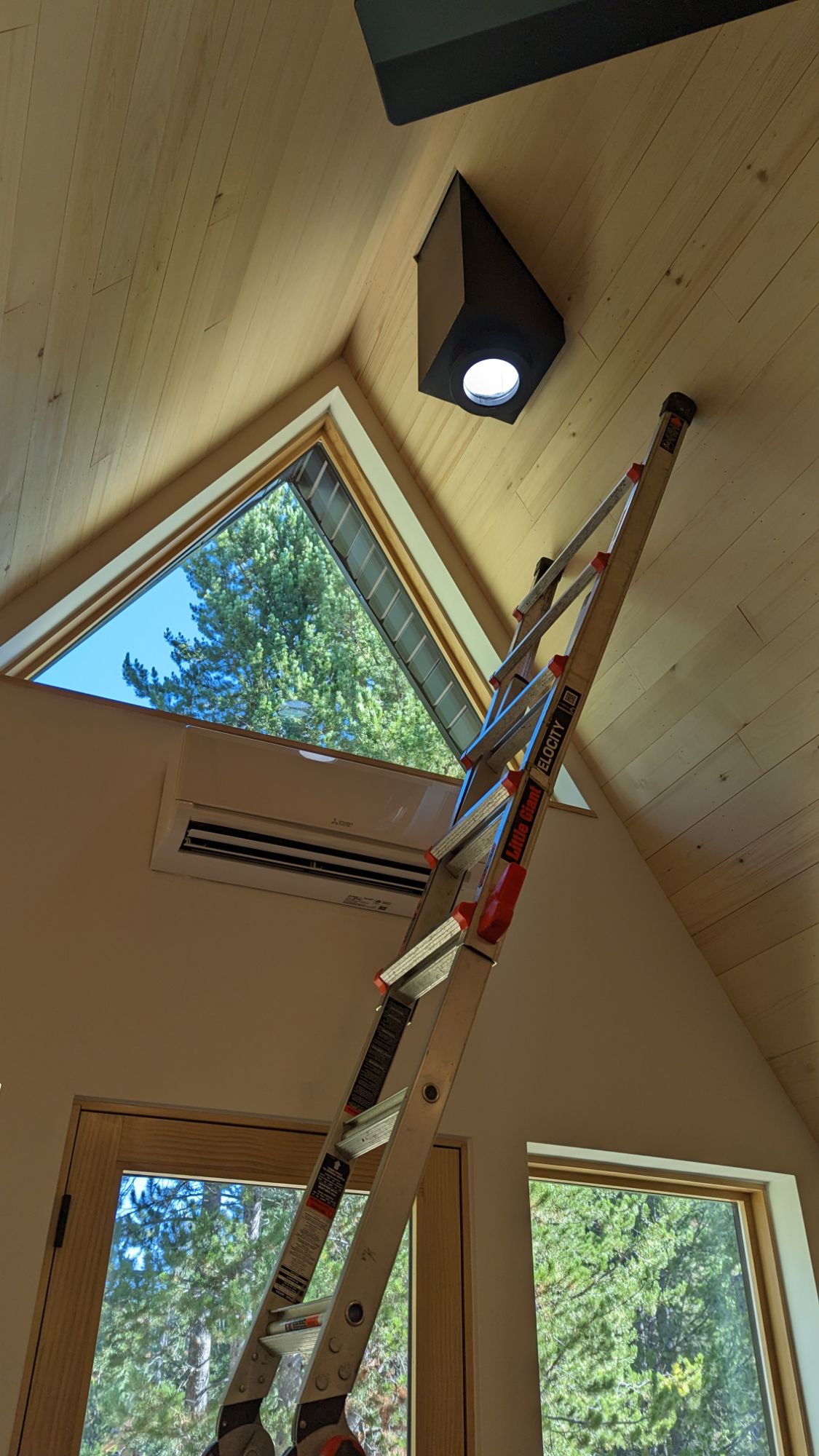
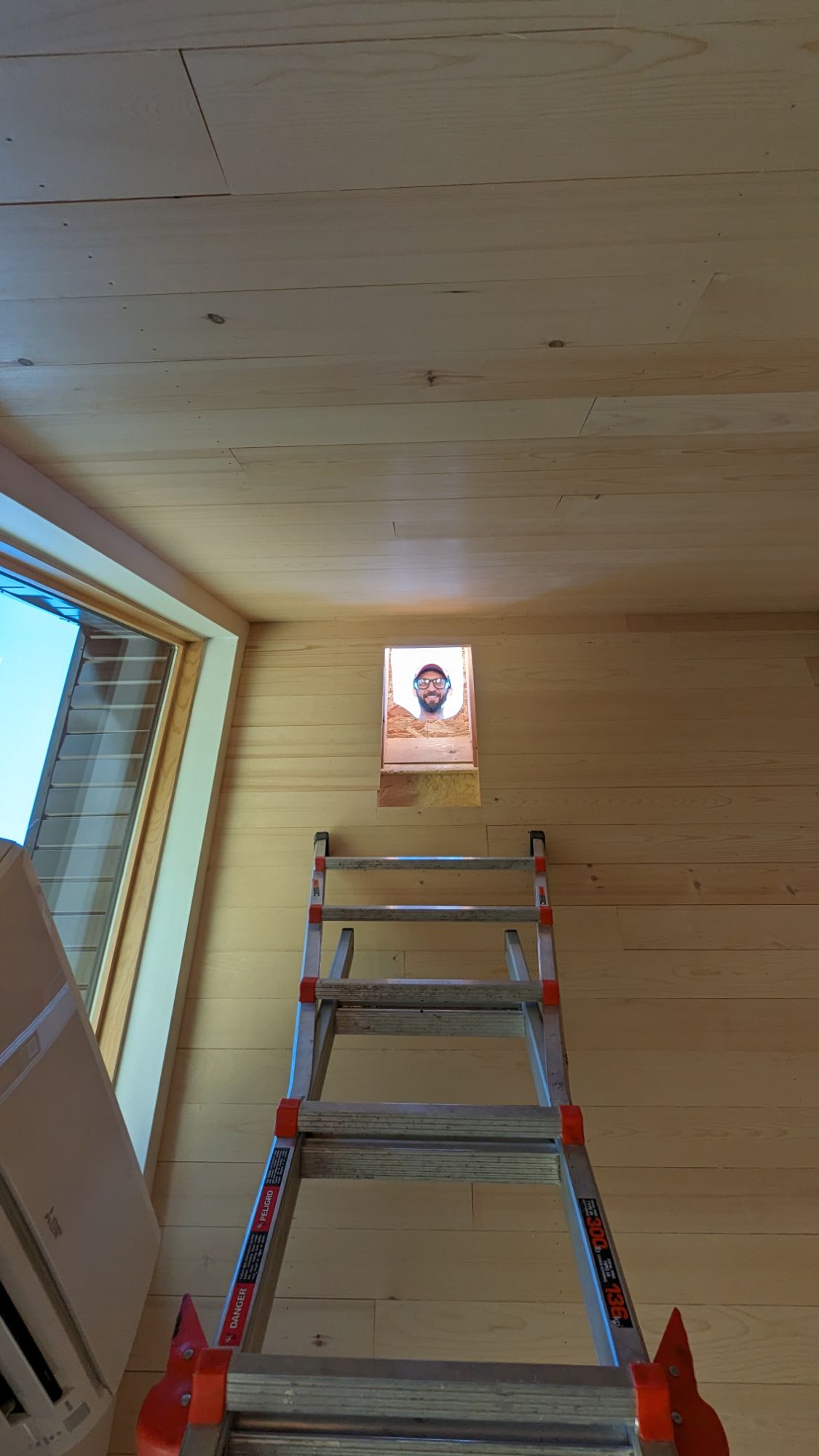
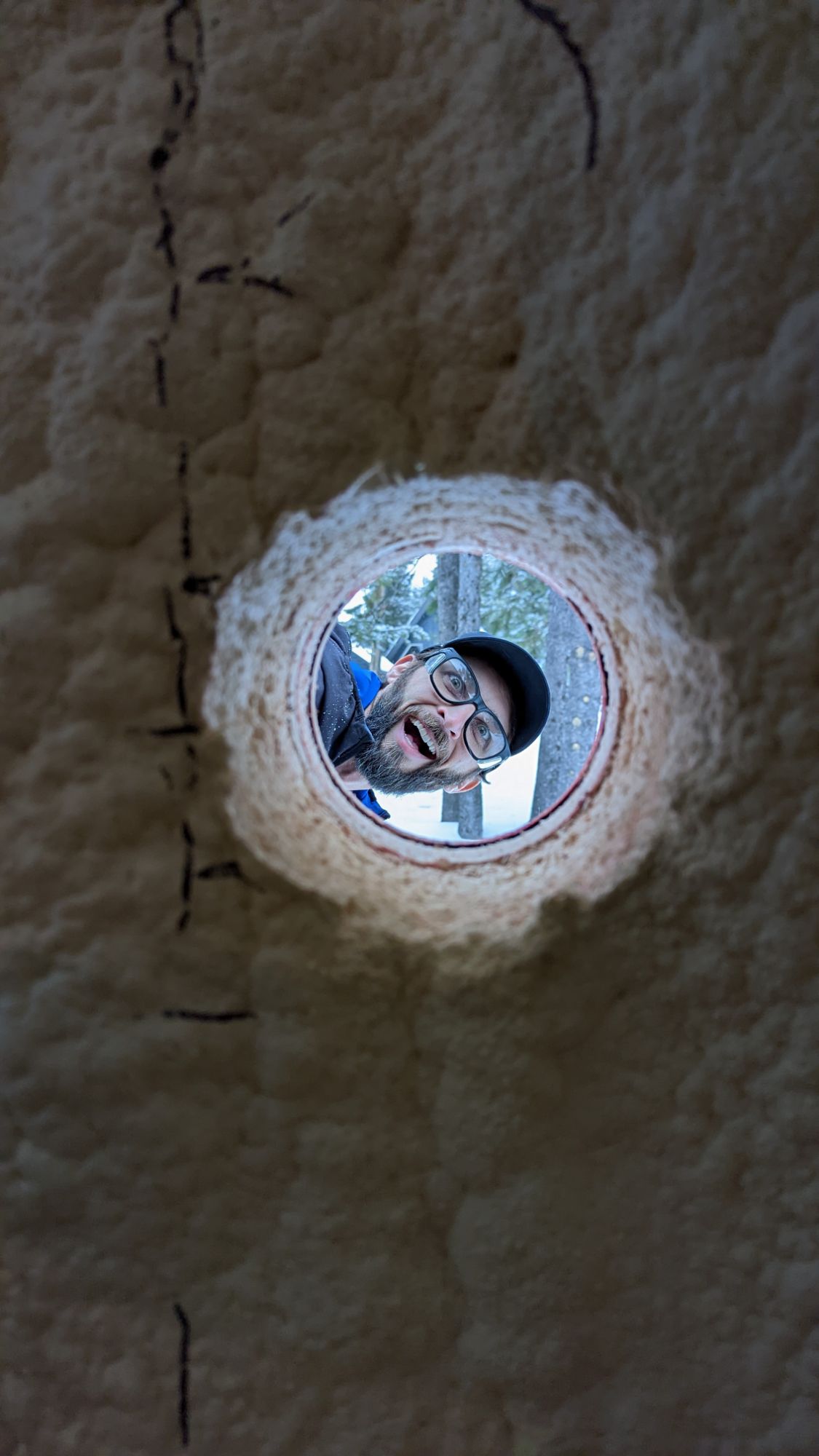
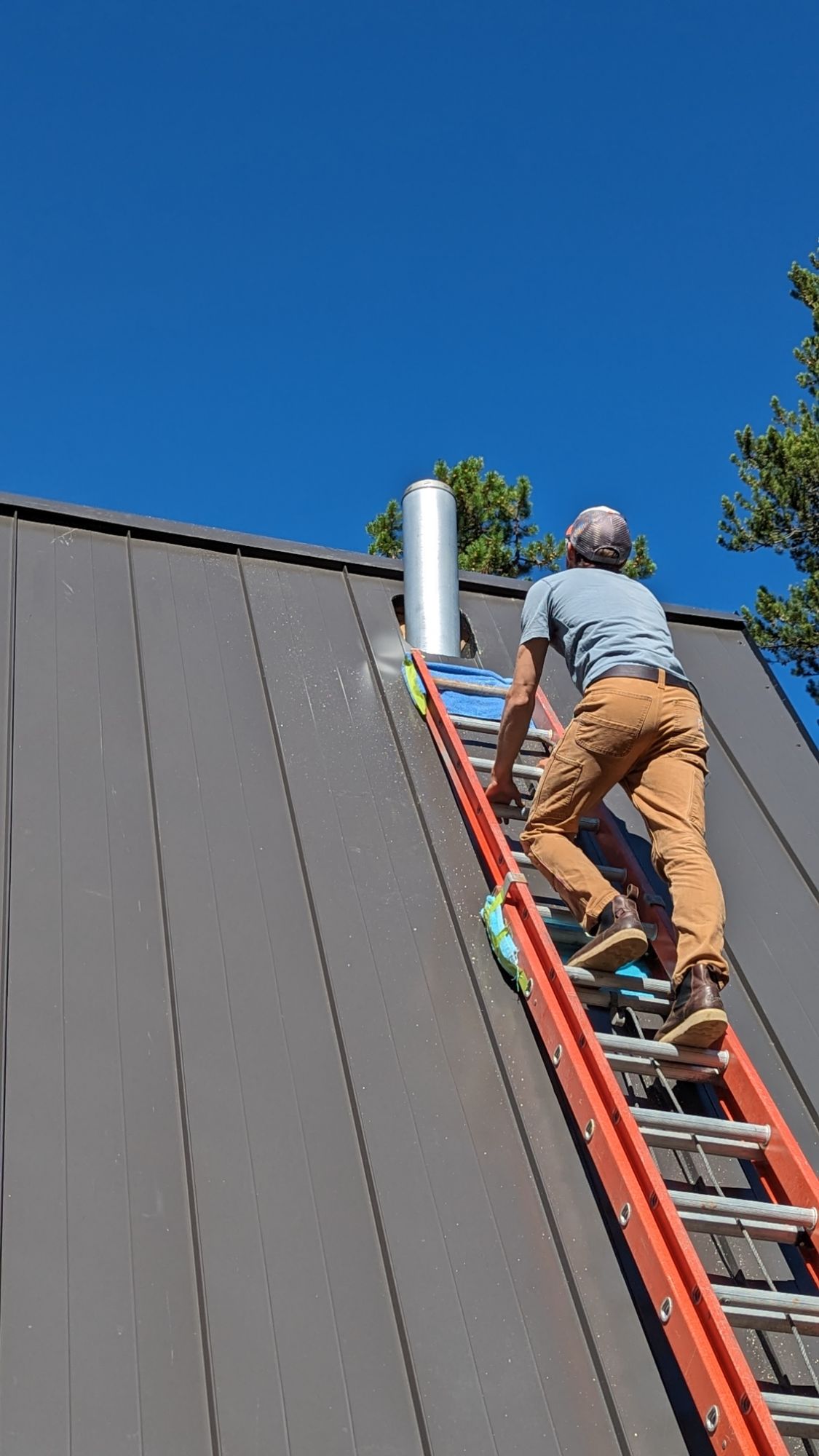
- Stove pipes and chimneys:
- It is very often a roof vulnerability and requires additional facets (crickets, valleys, etc.). If you haven’t already – review our advice on cabin roofs.
- The large holes they require are also major gaps in your air seal – allowing conditioned air to escape and outdoor air to infiltrate.
- And lastly, they’re thermal bridges connecting the inside to the outside.
- A Pretty Good House (air-sealed and insulated) is going to quickly overheat from a wood stove since most are narrowly – if even possibly – regulated.
- Again, that air-sealed and well-insulated home is not going to provide the combustion air required for a fire to burn and draw properly. You’ll have to provide both a fresh air intake for the stove (another large hole and thermal bridge) along with properly sized make-up air so that when you turn on your kitchen range hood or bathroom vent you don’t create backdrafts that smoke you out of the home.
- A fire – like burning any fossil fuel – is going to create combustion gases. Having a fire indoors creates an unnecessary threat of toxic fumes being released into your conditioned space.
- Having a wood stove increases the risk of wildfire.
- You could accidentally and unknowingly start a fire. Be sure to install a spark arrestor.
- Stored firewood is a fuel hazard. Review guidelines on defensible space and store firewood appropriately.
But, Wood Stoves Are A Wonderful Backup Plan
That all said – there are a number of reasons the pros may outweigh the cons. And with as much as we preach redundancy design – backup heat is a hard one to ignore. Here’s what to look for in a wood stove for cabins.
- Still, avoid fireplaces. A wood stove is wildly more efficient, allows for regulation/adjustment, and is healthier than a fireplace. Use the EPA’s guide to find stoves that are EPA-certified (clean burning and highly efficient).
- A terrific backup heat source that doesn’t require power. That said, stoves with thermodisc fans help distribute heat and can easily run off a battery backup.
- Many gas stoves can be configured so the thermostat has a battery back-up allowing them to operate in a power outage.
- If you’re building somewhere where you can sustainably harvest hardwoods – it could be a very economical way to heat a house.
- Building somewhere very cold (beyond -15 degrees Fahrenheit) where even modern heat pumps may not be able to always keep up – provides a robust option to supplement (if you’ll be home).
 Pretty Good Builder
Leave a comment