
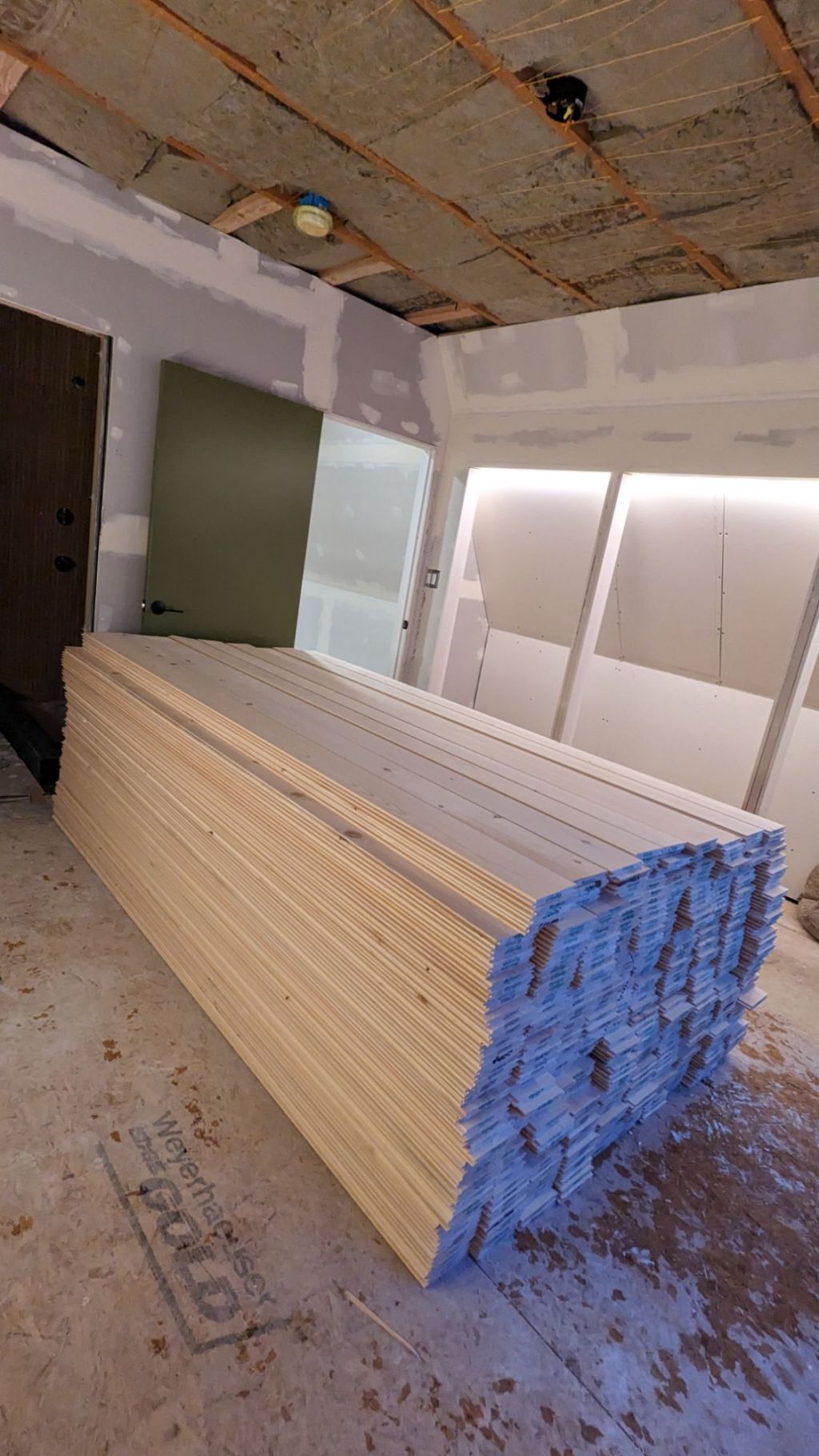
Log cabins, a-frames, chalets, and just about every other kind of cabin all have in common the prolific use of wood millwork. Tongue-and-groove wall cladding, wood floors, and all wood millwork need to acclimate before installation to prevent unwanted shrinkage after installation.
What Is Acclimating?
Acclimating is the process of the wood product’s moisture content balancing with the environment it’s in; referred to as the equilibrium moisture content (EMC).
Why Acclimate Millwork?
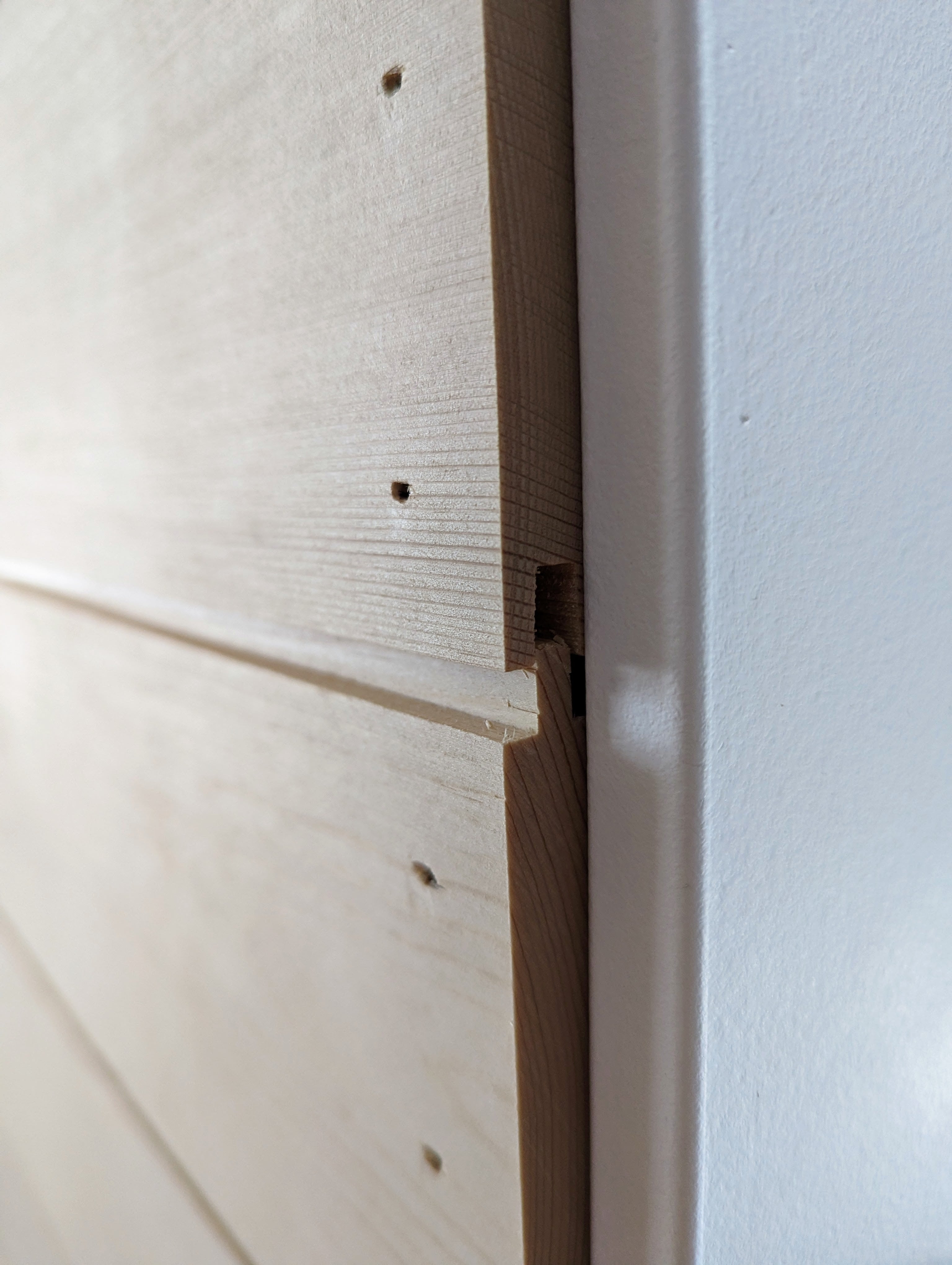
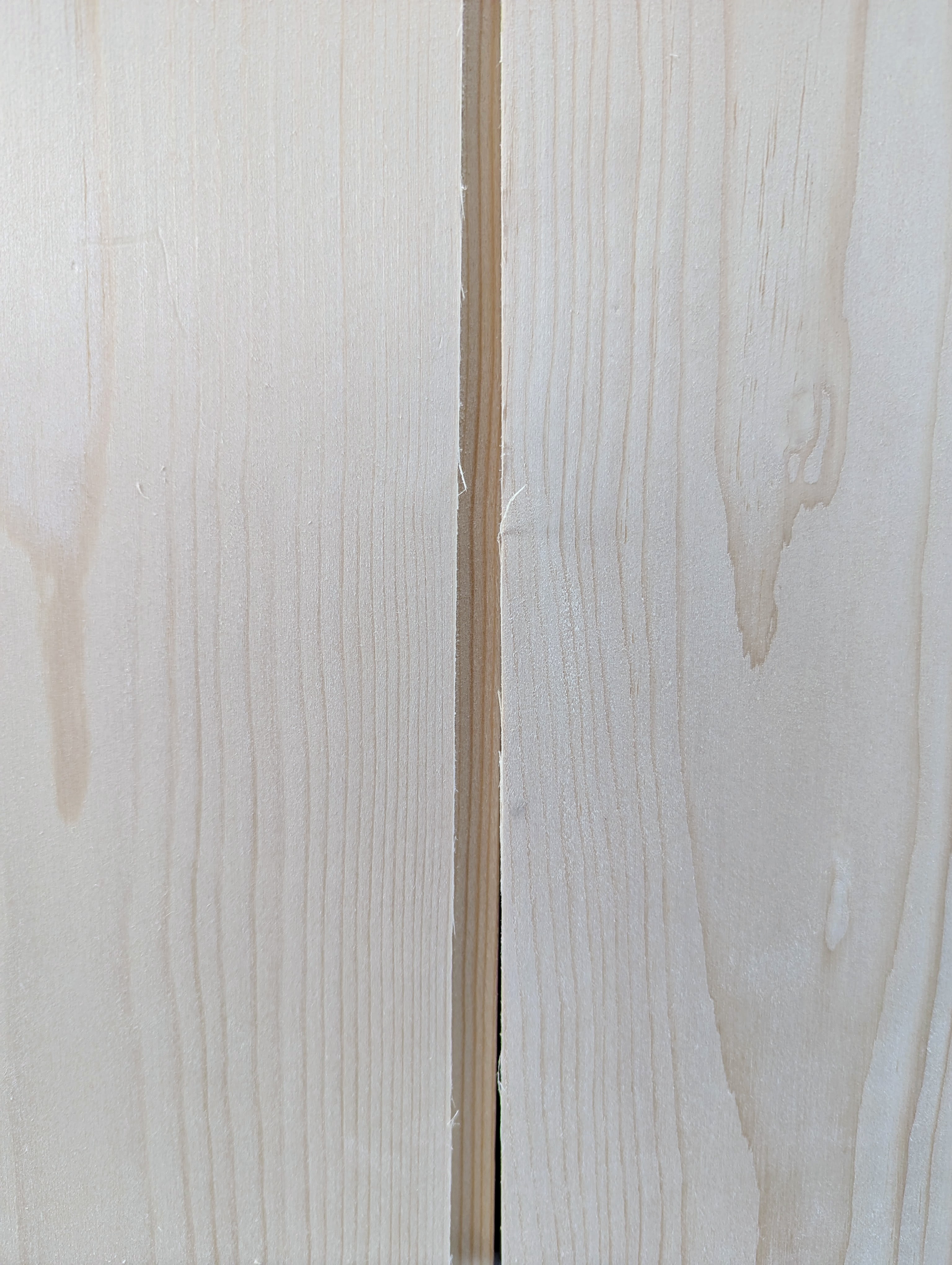
If you’ve built a fence, deck, or another outdoor wood project – you have witnessed lumber shrink – and develop gaps (or buckle and/or warp too!). The amount this can happen with nominal lumber is huge – and common because it’s often not fully kiln dried and the EMC is way out of balance.
But while shrinkage on a deck or fence may seem tolerable – that’s not the case with the finish carpentry and flooring on the inside of your cabin.
The last thing you want is for there to be large gaps in your tongue and groove or trim. For that reason, it’s important to acclimate all millwork ahead of cutting or installing it.
How Long Should Wood Acclimate?
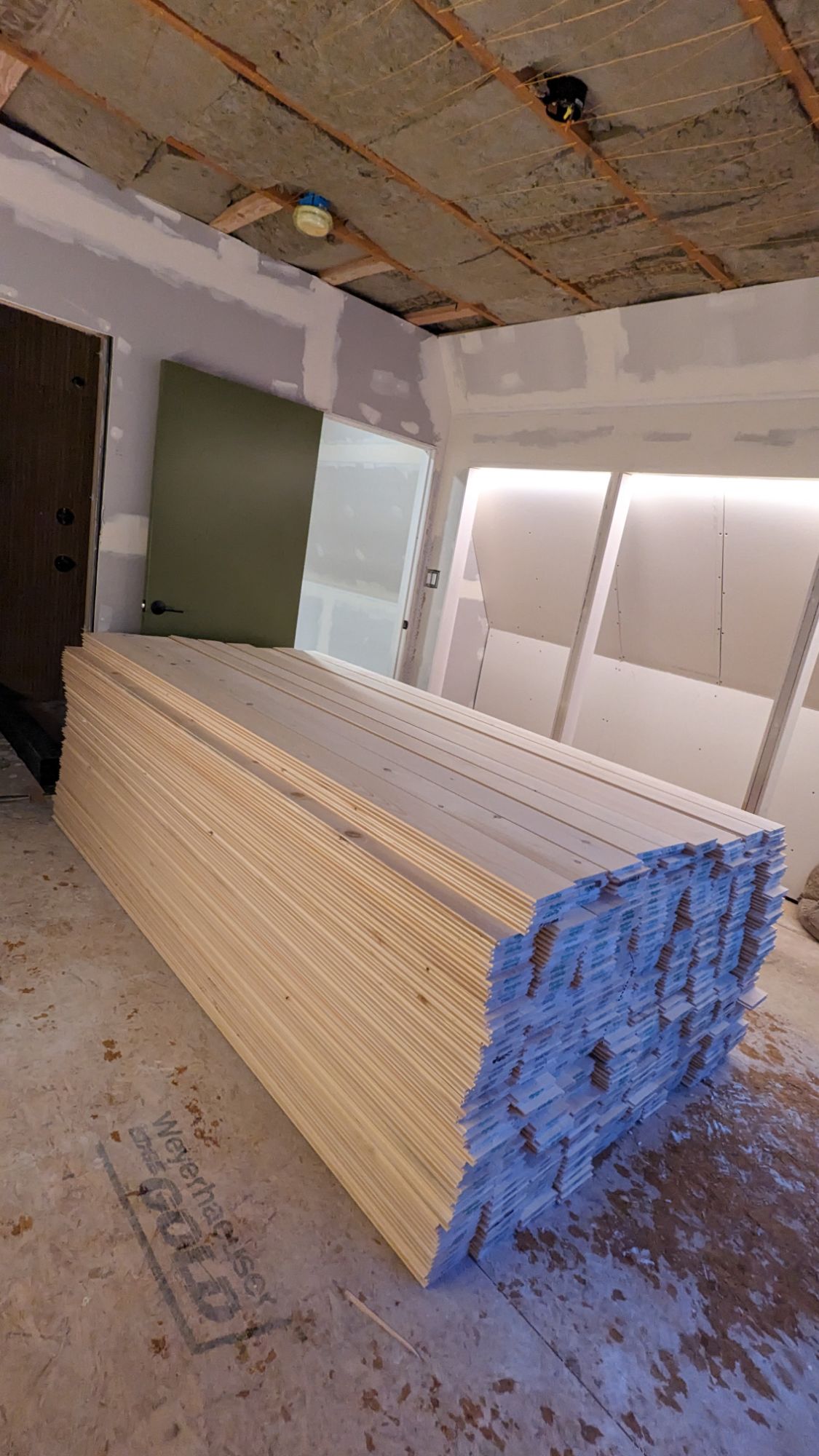
The answer is going to vary wildly. Furniture makers using expensive and exotic woods from faraway places may not even put a duration on it – and instead use a moisture meter. While some manufacturers of wood products have a flat duration applied in their install manuals. For example, Nakamoto Forestry states a required 14-day acclimation period.
The rule of thumb here is that you want the product to normalize (EMC) for the climate in which you’re installing it. For exterior applications acclimate in an open garage or other location protected from weather. For interior applications acclimate in the climate-controlled installation location.
The further away and more different the climate it came from than where it’s being installed – the longer it’s going to take. What’s right for your project might be overnight – and for others, 14 days may not be enough.
 Pretty Good Builder
Leave a comment