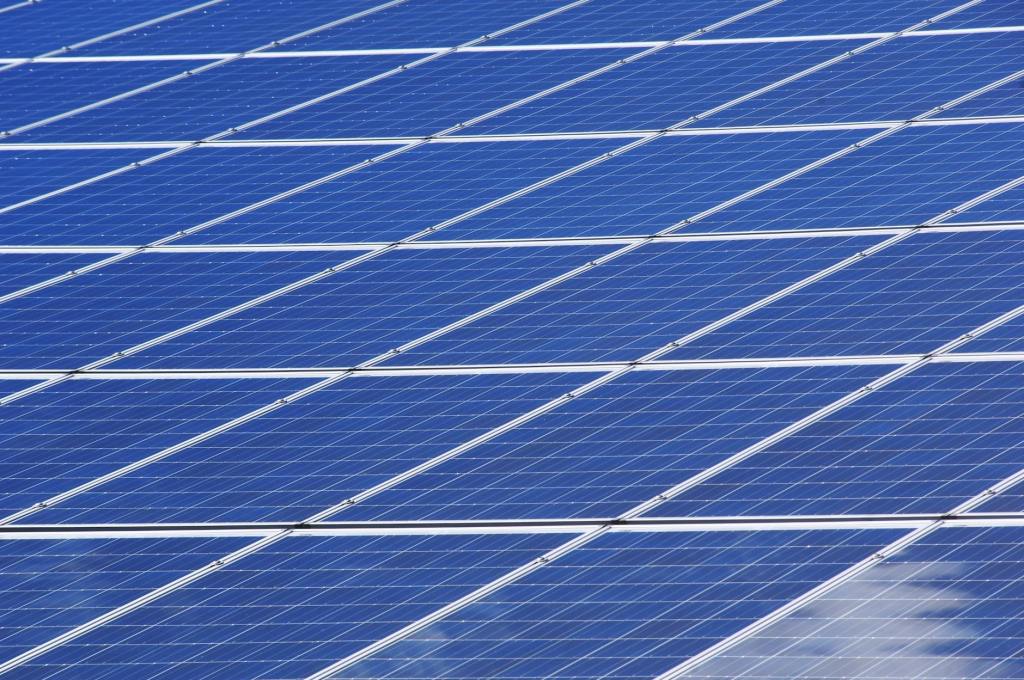
The Pretty Good House (PGH) standard says that a PGH should be designed and built with solar – or photovoltaic (PV) – in mind. That means considering the location, orientation, and design of the roof and electrical system for solar of your cabin. (You can use this free tool to get an idea of what kind of impact solar can have on your power needs and location.)
For those building cabins – this may not just be a consideration but a requirement. For example, a remote location may require a solar-powered cabin to be fully off-grid.
Solar PSAs
Solar has more assumptions made about it than just about any other system in a home. And a lot of those assumptions are wrong or misguided. So let’s first start by setting the stage with some facts.
- Grid-connected solar (access to grid power and/or sell power back) means that if the grid goes down – so does your power. Solar alone won’t keep your power on in an outage.
- You’ll still have a power bill from your grid-connected power company with solar. It will be less because you’re using less grid power. You may also get credits through net metering.
- Solar panels still produce energy in the rain, on cloudy days, and when covered with snow. But their efficiency drops.
- Solar panels not only work in cold climates – they prefer them. Solar panels perform best in cold and sunny climates because heat interferes with the conversion of sunlight into electricity.
- Solar panels work in really hot climates, but high temperatures can make the cells less efficient.
Solar for Renewable Energy
Yes, solar panels require fossil fuels to create a panel – but once manufactured that panel will produce zero-emission power for 25-35 years before being able to be recycled (into new panels). The math is overwhelmingly carbon negative making solar an excellent renewable energy source.
- A PV system should be designed to provide as much power as possible – making an all-electric home’s operational carbon as low as possible.
- If a PV system cannot provide all the power needs of a home, consider a community solar project. Not sure what community solar is? Here’s a link to the basics from the Energy.gov.
Solar for Off-grid or Backup Power
One of the most attractive aspects of generating your power is the self-reliance associated with it. For some, it’s simply a means of backup power. For others that are off-grid – it is the primary source of electricity.
Backup Power for Grid-connected PV Systems
As stated above – if the grid goes down – so will your electricity even if you have solar installed. If you want to benefit from solar in a power outage – you’ll need to invest in a battery system or generator – same as those who are off-grid (read below).
Off-grid PV Systems
Only the most rudimentary systems have solar power anything directly. The most sustainable way to build an off-grid PV-powered system is to tie it to a battery. The battery then powers the home’s electrical needs. The solar panels charge a battery and the battery powers the house.
Battery Backup Systems
This quickly makes the battery system incredibly important. The best-known system is the Tesla Powerwall. Others are out there along with the ability to build your own.
The big issue is that lead-acid batteries, which are the cheapest but also have the lowest energy density, cannot be stored indoors due to battery gasing. Lithium and cobalt batteries have much greater energy density – but are considerably more expensive and run at a much higher temperature that requires an auxiliary cooling system of their own.
Going back to the Tesla Powerwall – which is close in volume to an apartment-sized refrigerator – can store 13.5 kWh; but is limited to 11.5 kW if provided continuously. How much is that? Less than the power needs of the average American home in a day. Most likely, a few hours.
If you can reduce your energy needs (step one of a PGH) – you’ll get more out of a battery system. Whether batteries are just a backup or you’re off-grid – you can most likely find ways to do without several energy-hungry systems in a home for the times you’re dependent on battery power alone (not recharging during use).
The TL;DR? Batteries function perfectly for off-grid and backup of solar-powered homes. However, they’re cumbersome to store and maintain; and you need a lot of them.
Generator Backup Systems
So is there another option? Unfortunately, the most cost-effective option is still a backup generator that runs on fossil fuels. For those on the grid, systems like GenerLink make setting up backup power from a portable generator for necessary needs (i.e. refrigerator, freezer, etc.) pretty close to plug-and-play. And very affordable. GenerLink paired with a multi-fuel portable generator is a force to be reckoned with for long and short power outages. Paired with a fuel like propane that doesn’t have a shelf-life it’s hard to beat for grid-connected homes for backup power – regardless if the home has solar.
 Pretty Good Builder