

If there’s a weakness in your cabin’s building envelope – it’s the windows. However, part of the reason for having a cabin is to enjoy the view and unique location. We’ll use the Pretty Good House as our guide as we walk through what to consider when deciding on window placement, use, and selection for a cabin.
Cabin Window Placement
Weather
Generally speaking, the more glazing there is, the worse the building envelope will perform. And this becomes more and more true as the climate you’re building in gets colder. For example, the best-performing double-pane windows available typically have an u-factor of 0.20 – which is roughly the equivalent of an R-5 insulating value. If you’re in climate zone 6 where the wall requirements in IRC 2021 are R-30; that’s a big hole in your envelope. The location and weather of your cabin should guide every aspect of your window design and selection.
- Consider the orientation of your building based on your latitude. Which aspects have glazing and how much?
- You’ve probably been in a house before where glare prevented you from watching TV part of the day or a room was too hot and/or bright to occupy certain times of the year. These are the results of ignoring the orientation and latitude when developing your window design.
- Northern latitudes should minimize glazing on the north side to avoid heat loss in the winter – and maximize those on the south.
- Southern latitudes should maximize glazing on the north side – but minimize and/or shade glazing on the south to prevent heat gain.
- Blinds and shades allow most heat to still enter the home – your window design should not rely on these to perform.
- Building code specifies requirements for egress. In addition to these requirements, cabin designers should consider a few other weather-related egress scenarios:
- What kinds of extreme weather may prevent egress from your cabin? Do you have a second-story egress window if there’s a blizzard? What about egress on multiple orientations of the building in case there’s drifting snow?
Wildfire
If you haven’t already – be sure to review our wildfire area building guidelines.
- Avoid placing windows on walls of the building most likely to be approached by wildfire.
- Ensure you have a means of egress on the walls of the building most likely to provide an escape from a wildfire.
- Avoid vinyl windows – especially on the first story and walls likely to encounter wildfire.
- All windows should be at least double-pane and those on the first story should be tempered.
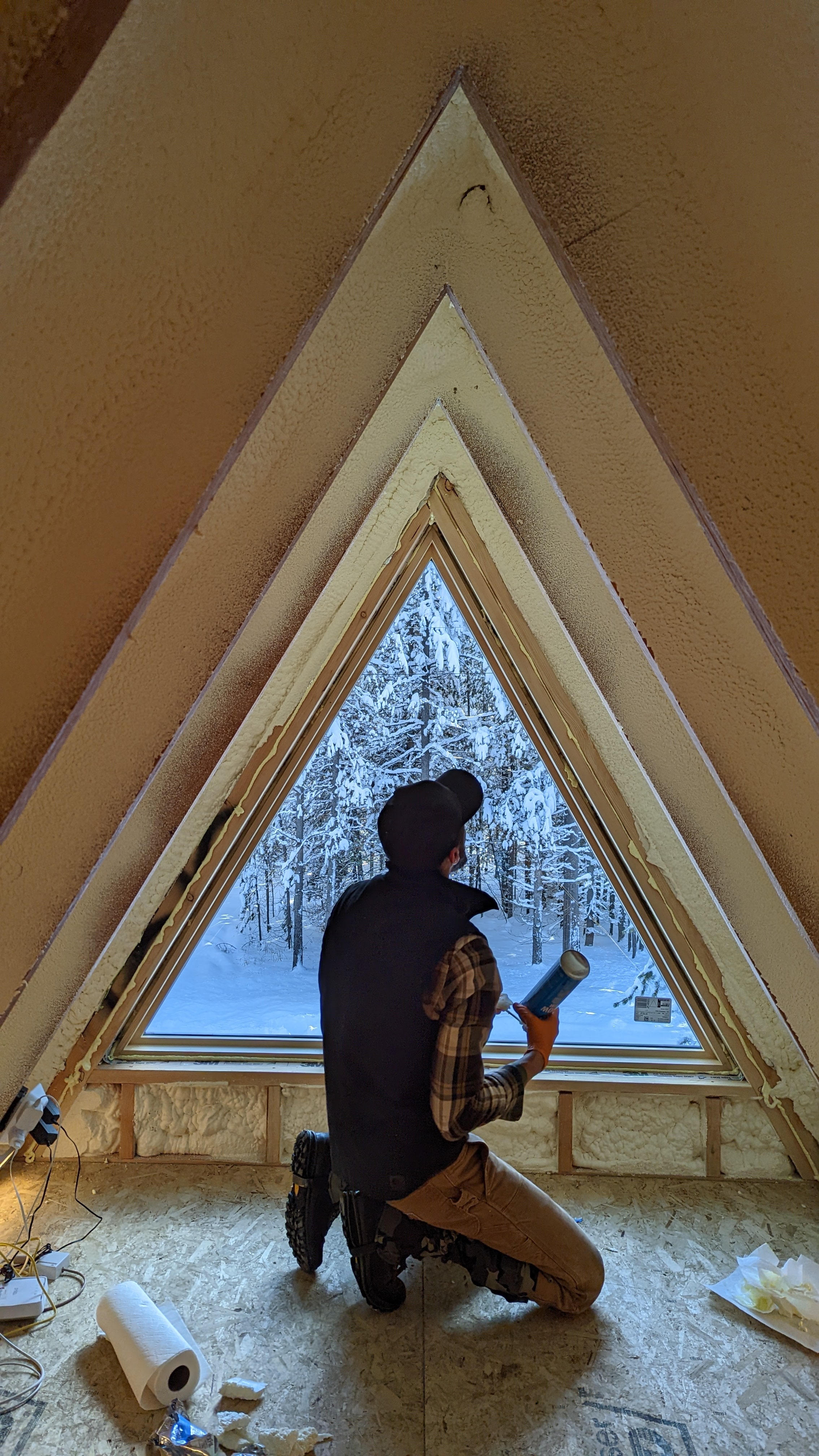
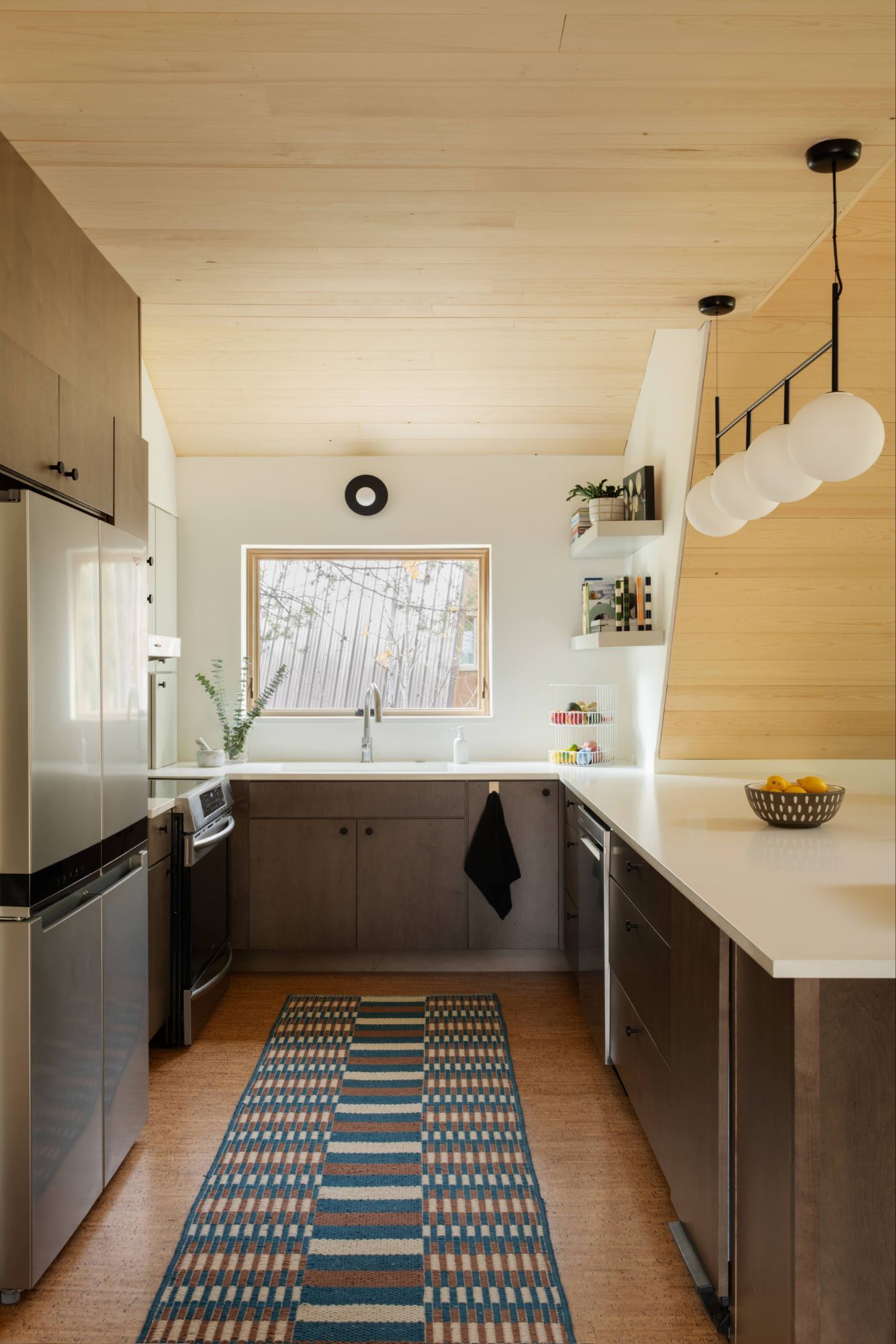
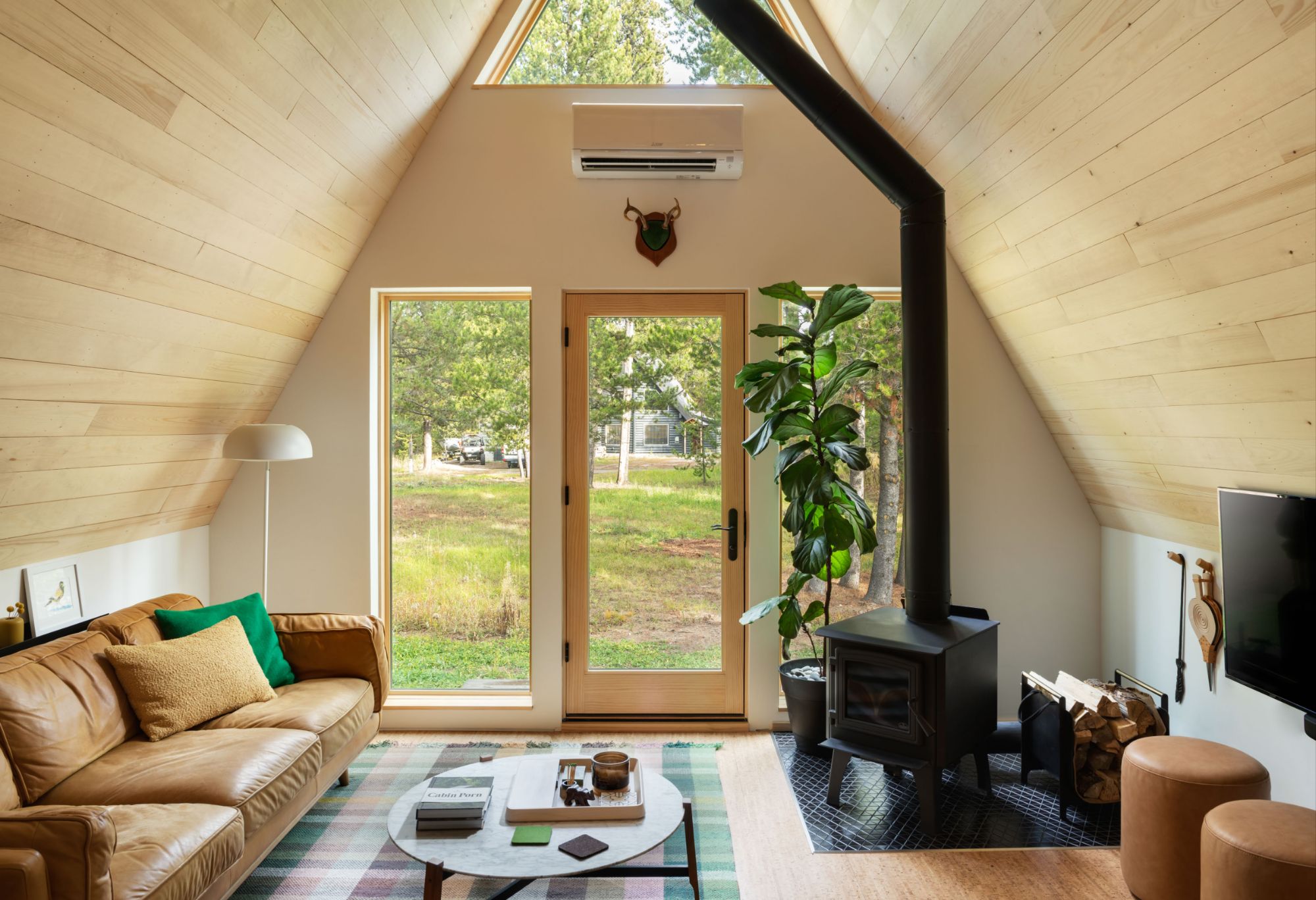
Cabin Window Use
Windows not only offer a view – but can provide egress and ventilation.
- Fixed windows are cheaper and perform better than operable windows. For walls with significant glazing, consider pairing a small operable window with larger, fixed windows to get the best of views and light, ventilation, and performance.
- Swinging-style windows (like awnings) perform much better than any sliding-style window. However, most swing-style windows have an internally mounted screen. This can be a pain if you have a lot of bugs; but is a much better option to keep screens safe from snow, ice, and wildlife.
Cabin Window Selection
As mentioned above – windows will be the weakness in your building envelope. For that reason, you’ll want to install the highest-efficiency versions you can budget. Below is a table that shows 2021 IRC requirements versus the Building Science Corporation’s recommendation. The R-values shown correlate with the IRC numbers to show you how poorly glazing will perform compared to your wall assembly.
| Climate Zone | U-Factor BSC Guideline | U-Factor 2021 IRC | R-Value |
| 1 | – | 0.50 | – |
| 2 | 0.35 | 0.50 | – |
| 3 | 0.30 | 0.40 | 2.50 |
| 4 | 0.30 | 0.30 | 3.33 |
| 5 | 0.24 | 0.30 | 3.33 |
| 6 | 0.18 | 0.30 | 3.33 |
| 7 | 0.15 | 0.30 | 3.33 |
| 8 | 0.15 | 0.30 | 3.33 |
- Large windows are a hazard to birds. Consider mutins to help prevent birds from crashing into the glass.
- Vinyl windows should be avoided for wildfire reasons (see above) – but also because they’re made of PVC (bad for the environment), weak, and perform poorly.
- Fiberglass is a good compromise on value (more expensive than vinyl, but less than wood or metal) and is rot-free.
- Metal framed windows need to be thermally broken – ideally with something besides air. They conduct heat and cold very well.
- Wood is a great material – but can degrade on the exterior over time. Some manufacturers offer wood-framed windows with a metal encasement on the outside – providing the best of both worlds.
- Look at a window’s performance – not just how many panes of glass it includes. There are plenty of double-pane options that outperform triple-pane offerings.
- Choose windows that swing not seal for the best performance of an operable window. Again, fixed windows are cheaper and perform better.
- Follow code guidance on what windows need to be tempered – but also consider tempered glass for wildlife and wildfire reasons.
 Pretty Good Builder
Leave a comment