
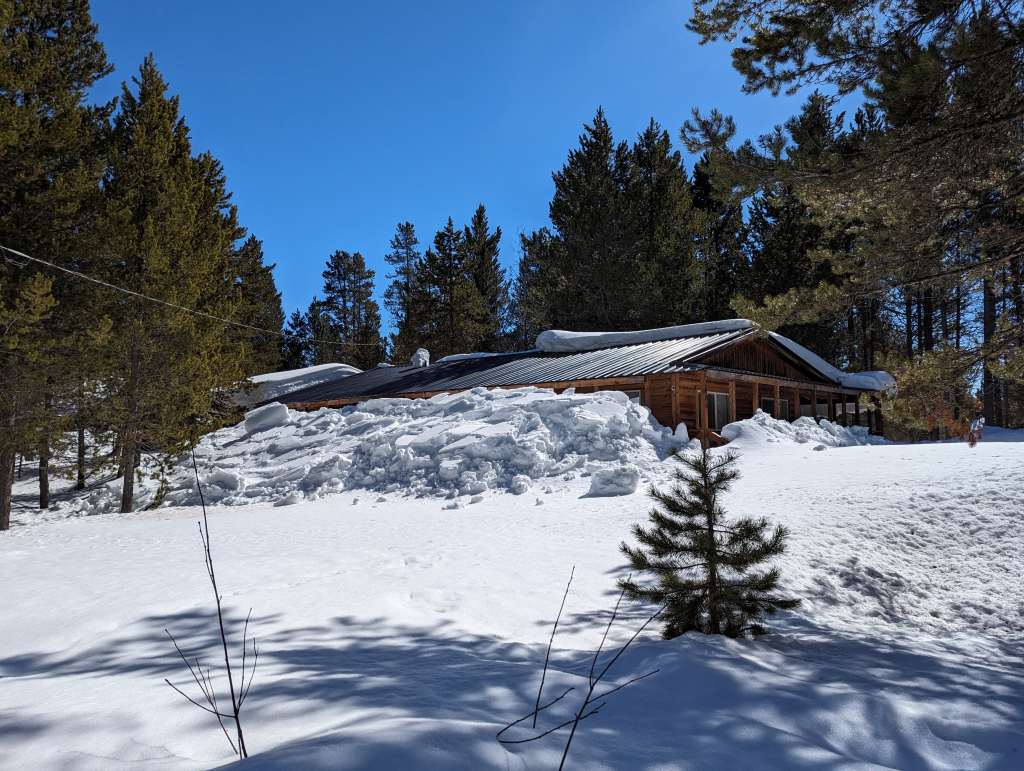
Building in snow country quickly makes the roof one of the most important systems of the entire build. There’s a lot to consider to make living in snow country a lot safer, more durable, and more comfortable. If you haven’t already – be sure to review our general roofing guidelines for cabins and rural homes.
Roof Design for Cabins in High Snow Load Areas
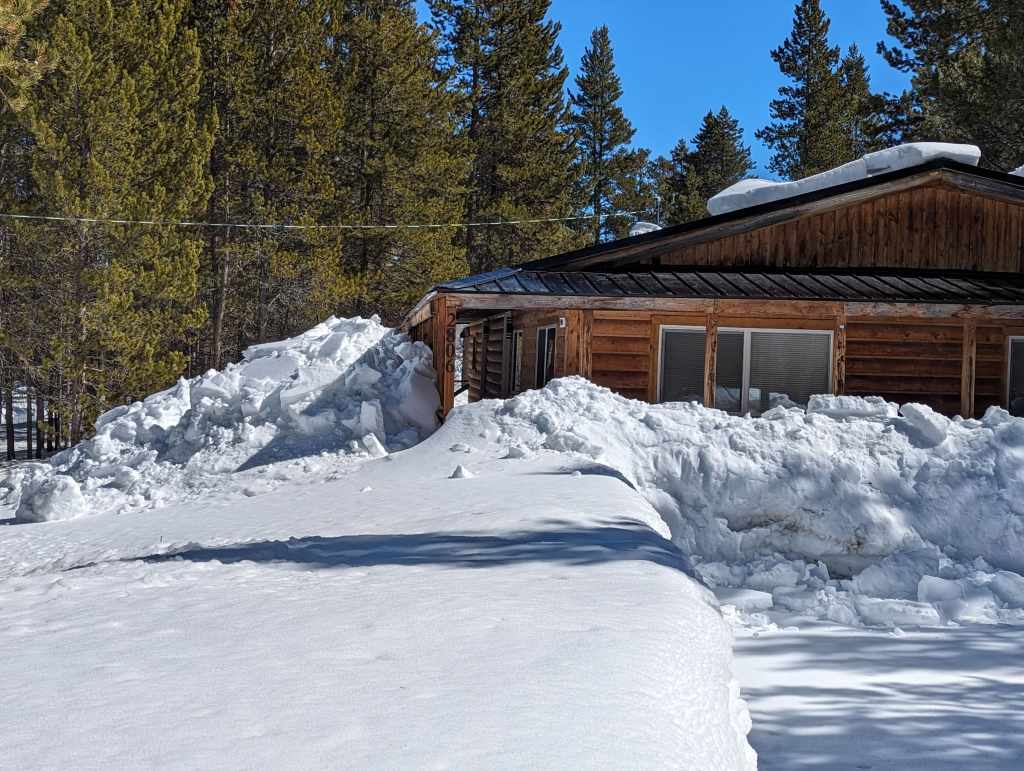
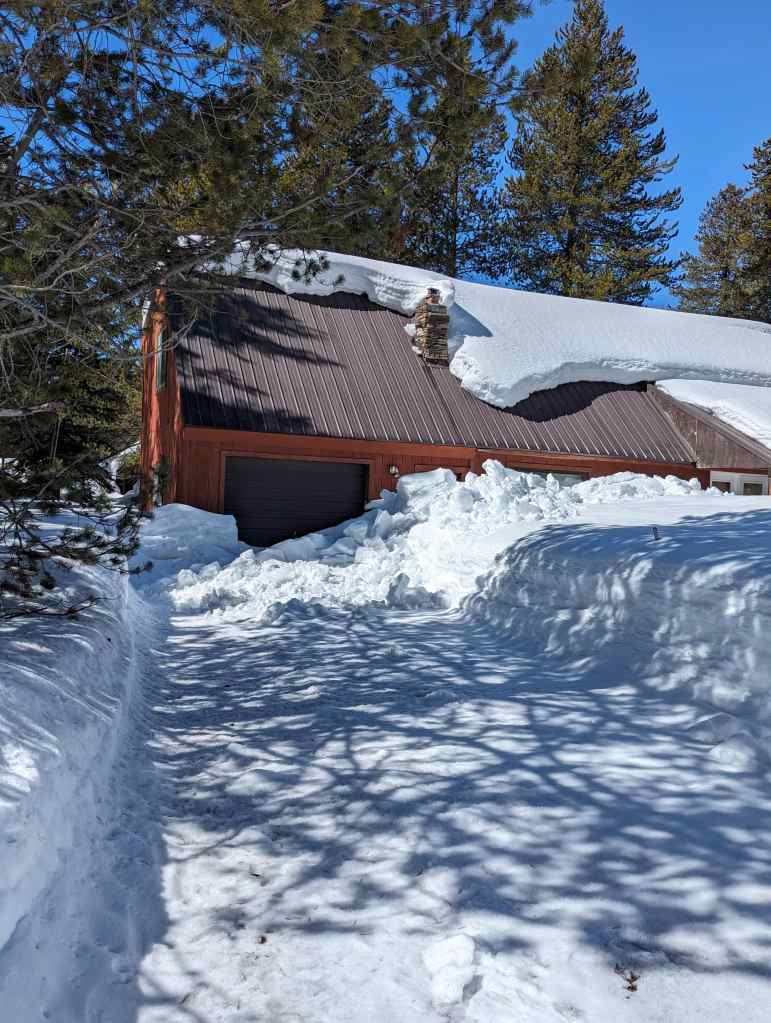
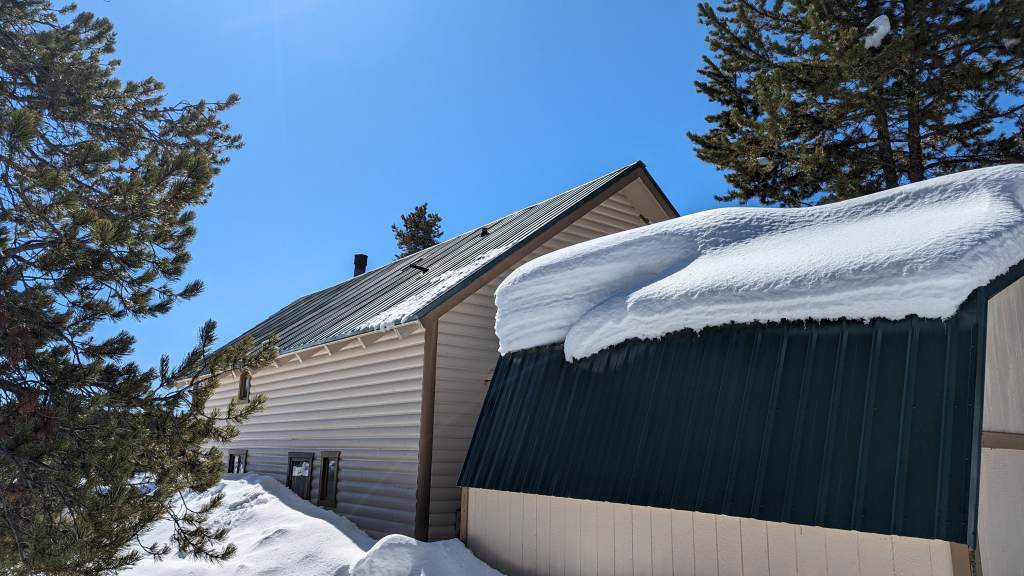
- While snow is an excellent insulator – it’s also very heavy. And the longer snow is in place to go through melt and thaw cycles from both thermal bridging and solar gain – the heavier it gets. The summary here is – you want to design a roof to avalanche or shed (steep, slick, and featureless). The less weight on a cabin – the better.
- When the roof does avalanches – where will it go? Snow that’s shed off the roof is often the consistency of wet concrete. It’s incredibly wet, heavy, and full of ice. Placing an eave over a driveway, doorway, or along a walkway is a recipe for a miserable – if not fatal – winter experience.
- When a roof sheds – anything on the roof in the path is liable to be damaged (pipe jacks, gutters, skylights). If you must have a penetration in the roof – it should be placed as close to the ridge as possible. Better yet, run penetrations through the fascia, soffit, or siding if you can.
- When a roof sheds – it’s very likely to tear off gutters. Design drip lines to avoid the need for gutters if possible.
- Eave construction is incredibly important to both prevent ice dams (cold roof) and control shedding snow. Extend eaves out over HVAC equipment, vents, exhaust, windows, and doors to prevent them from being snowed in.
- Heat tape is a band-aid fix to a problem that can easily be designed out. Don’t depend on a system to make poor design and construction function properly.
- Raking and shoveling roofs is a lot of hard work – and dangerous. Design out the need to maintain a roof over the winter.
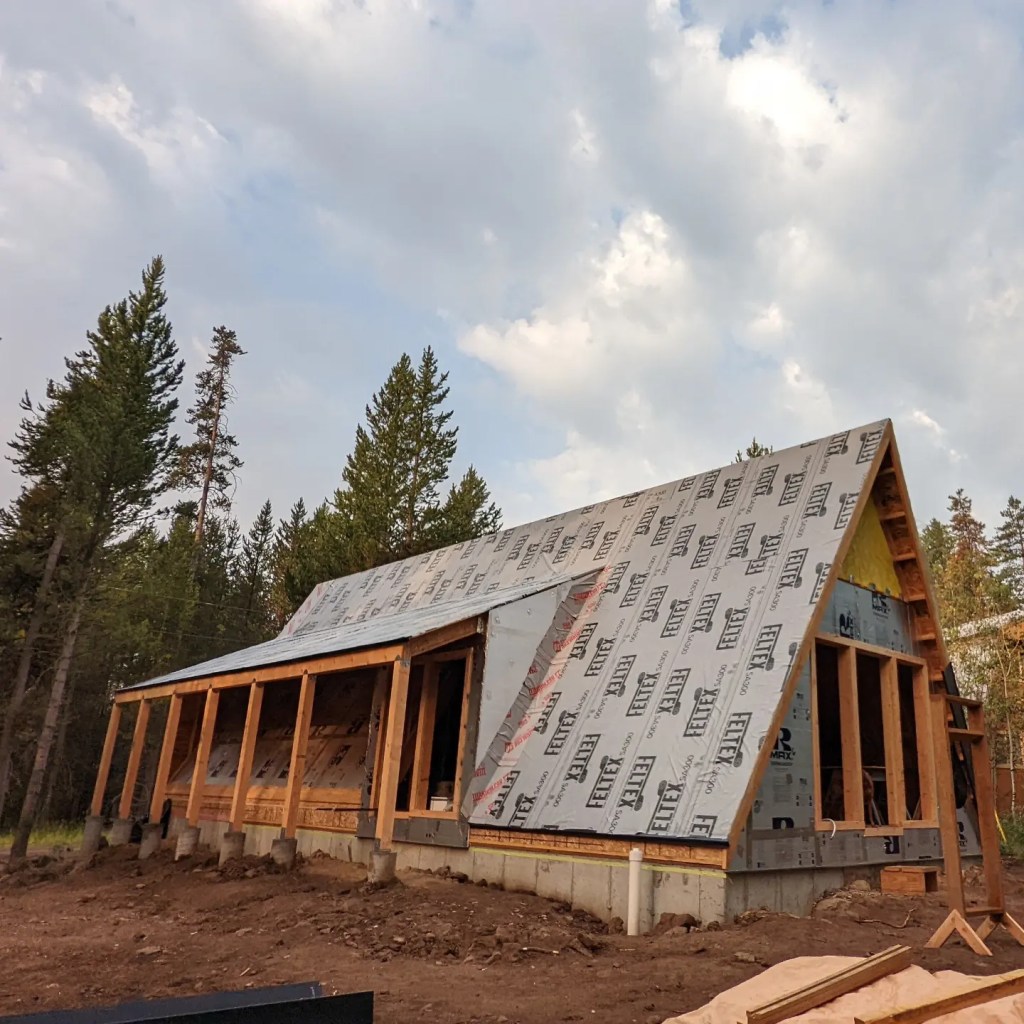
- Simple (gable), slick (standing seam), and steep-pitched roofs with minimal (or no) penetrations, valleys, dormers, crickets, and skylights are the best designs. They promote roof shedding (rather than gathering and creating ice dams).
- Avoid aggregate-coated roofing materials (shingles) that hold snow and absorb water.
- Avoid roofing materials that are heavy, fragile, and prone to damage in freeze-thaw cycles (clay, slate, concrete).
Roof Installation for Cabins in Snow Country
- If you live in snow country – forgo the very minimal savings of only installing the code-required ice and water shield (I&WS) and instead install I&WS on the entire roof.
- Roofs on battens and/or a continuous insulation layer will help prevent thermal bridging – both from the outside in, and inside out. Thus this will help prevent ice dams as well as gain heat in the summer.
- As alluded to above – eave construction is incredibly important. Do everything you can to maintain a “cold roof”.
 Pretty Good Builder
Leave a comment